Over the weekend, I was lucky enough to meet up with a friend of over 10 years. While my memories referred me to the times we’d sneak into the drive-in theater and eat at Tony’s pizzeria, I was glad when I began to see how much we both had matured, yet still stayed true to who we were in the past. Somehow, despite a 1000-mile distance and hardly any communication, we managed to be able to enjoy each other’s company once again. Anyone with the experience knows this is one of life’s true delights.
Enough with the sappy stuff, though.
Throughout our conversation, we ran into the subject of her and her boyfriend’s eating habits. Both being die-hard vegans, they expounded on me the details of their lifestyle. After a two hour get together at a local vegan restaurant filled with talk of politics, morals, and solutions, I had heard more about veganism and the philosophy behind it than ever before.
That said, we arrive at the point of this overly introduced article: veganism.
What is Veganism
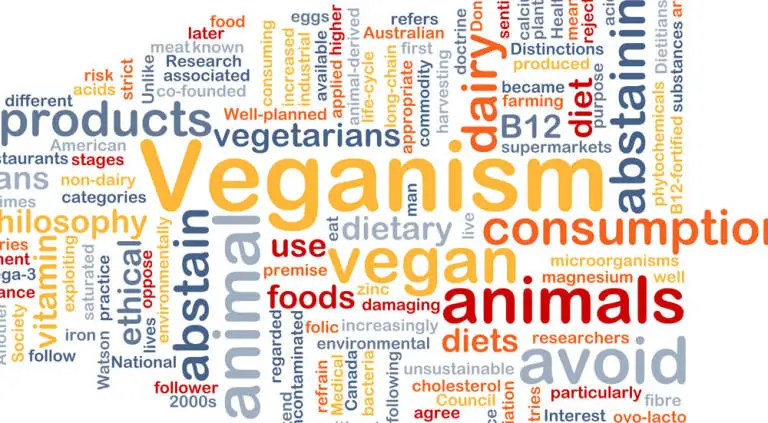
Defined like a textbook, “veganism” is the doctrine that people should live without exploiting animals or animal products. From that core principle, vegans adopt a number of aligned practices such as refraining from eating food made from animals, and avoiding goods that use animals products – whether it be clothing or for any other purpose.
In regards to diets, vegans have no problem being able to meet their daily-recommended intake. Veggie wraps, pumpkin seed crusted lentil patties, and salads filled with their favorite vegetables contain tons of fiber, vitamins, and minerals. Some point to the argument that without meat, vegans are more prone to become protein-deficient: don’t buy it! Most grains contain the recommended serving, and foods made from soy products or containing nuts are filled with the nutrients we need.
Then again – to be honest – I wasn’t first convinced that ‘vegan’ had much argumentative weight to it. (Probably) Like most people, I assumed that vegans are vegans because they care so much about animals – a kind of “think of the animals!” emotional appeal – and that’s about it. Well, that’s far from the truth.
Veganism: Roots in Normative Ethics
On top of the argument that we shouldn’t exploit animals, vegans have a sophisticated philosophical groundwork to their lifestyle. Essentially, vegans are rooted in normative ethics. That is to say, for example, that they share the same ‘root question’ as utilitarianism, virtue ethics, and egoism; “what ought one do, morally speaking?” To an egoist, whatever best for the self is defined as the ‘right thing to do’. To a vegan, the ‘right’ thing for humans to ‘do’ is to not exploit animals or, through extension, the earth.
To put it differently, a vegan would argue that the human being doesn’t have an inherent right to instrumentally use animals or other resources as they see fit. Furthermore, the ability to manipulate and control environments does not justify the action of doing so; just because we can, doesn’t mean we ought to.
As one would notice, the philosophy here isn’t too far from organics or environmentalism. In fact, nearly all aspects of each are identical. All three see a tendency of humans to overextend their authority into an unnatural realm, and they subsequently try to correct it by defining better standards of what is healthy, moral, or sustainable.
Reconsidering Veganism
Putting this into perspective has led me to respect vegans at a much higher level. The media – unsurprisingly – usually paints them in a hippie-esque sort of way with dirty clothes and an unsettling over-infatuation with animals. In reality, they are normal people – just like you and me – only with the sole difference of diet and moral perspective.
Despite the power of our conversation and the moral appeal to veganism, I remain to be the person I was; a meat eating (free-range and grass fed, mind you), animal using consumer. At the same time, however, my views have changed at the base, and I now try to avoid the unnecessary use of animal products (granola cereal for breakfast, not ham and egg sandwiches)!
It’s amazing what a few hours with a good friend will do, especially when that good friend is more like family. While I may be biased, vegans are nothing but good in my book, and while I may not agree with all of their views, I respect their underlying philosophy and moral conviction. Respect for the planet and its inhabitants is a belief everyone should subscribe to.
That said, go make that call to your best friend from high school or college. It may have been awhile since your last chat, but I can guarantee they’d love to hear from you. Who knows, maybe after a cup of coffee or tea, you may change both of each other’s lives.


October 20, 2010 at 11:32 pm
I love you.
May 29, 2011 at 11:58 pm
I have recentley became a vegan and im really enjoying it!
September 9, 2011 at 12:27 pm
Me too! I feel so much lighter and healthier as a result!
September 9, 2011 at 7:13 pm
I recently got some chooks in my backyard– I got them after they have done their 14-months of egg-laying from a free-range egg farm. They are pretty happy chickens, I’m trying hard not to spoil them, but I work at getting natural feed for them (wholegrains soaked in water overnight to soften, protein powders (mine, when I was avoiding meat), lots of vege scraps etc)… I’d be hard pressed to say they are exploited for their eggs…
But the point is, while I was doing research on care and feed of backyard chooks, someone made some good points: chickens are omnivorous– they eat everything, including baby mice (in this example, the writer discovered mice nesting in the chooks’ boxes, the chooks got to them before the writer could stop them…). They’d happily eat meat meal if you give it to them. But morally / ethically, I, the human, find it disgusting (meat meal is ground up scraps from abattoirs), so I look for alternatives. Basically, it’s about being open, finding out more about other ways of living and determining what works for us, and if we can live with that morally and ethically. “Respect for the planet and its inhabitants”– definitely!!
November 15, 2011 at 4:34 pm
Yet, you show you do not truly respect all of the inhabitants of the Earth by choosing to still use animal products. Free range and grass fed is fine, but there is still considerably cruelty involved in that.
November 15, 2011 at 5:03 pm
Change takes time, and I’m still working on it. I probably eat about 60% less meat than I before, usually only for dinner, if that. I’m still a major fan of dairies and eggs, though, as I’ve read quite a bit about how the vegetarian societies of India are actually lacto-vegetarian and how many sub-groups of vegans, namely monks, consume eggs. It’s a process
November 15, 2011 at 5:13 pm
I’ll be honest, this article was boring. The vast majority of pro-vegan articles, like this one, focus on ethical considerations only. Vegans seem poorly informed on the nutritional benefits of a (smart) vegan diet, because I’ve never seen them discuss the pros of being vegan in those terms.
November 15, 2011 at 6:05 pm
Sorry you didn’t enjoy it, Brandon. But I urge you to reread the title and perhaps the entire article. This isn’t a pro-vegan article with a call to action to quit eating meat. This is a discussion of “the philosophy of veganism.” I am not a vegan, and this was purely meant to be an exploratory review of the ethical considerations of the diet. Readers, who might not understand veganism as well as you, often find this type of thing useful!
April 4, 2012 at 1:08 pm
“To put it differently, a vegan would argue that the human being doesn’t have an inherent right to instrumentally use animals or other resources as they see fit. Furthermore, the ability to manipulate and control environments does not justify the action of doing so; just because we can, doesn’t mean we ought to.”
But vegans do use resources as they see fit… all the time. They find ways to rationalize why their choices are more ethical but in fact they are not. What many vegans forget is that their food comes from mass agriculture which is every bit as destructive as factory farmed meat. Many, many animals die to provide fruits and veggies to the masses, native land is lost, and soil is eroded, but yet that is never considered or it is justified in some bizarre manner. Eating veggies is not a more ethical choice, death occurs either way but omnivores own it instead of pretending it away. I know which sounds more “ethical” to me.
April 4, 2012 at 2:05 pm
Jesse I cannot believe how grown up you are! Kudos on doing what you feel is right, I have so much respect for you! Veganism makes sense physically, morally, and philosophically, and for me its also spiritual. Great article!
October 15, 2012 at 8:42 pm
A few years back a good friend came to live with me who is a vegan. Through many discussions I decided that the philosophy was something that I too could agree with. I tried the vegan diet. She trained me in food combination, cyclical eating, etc. I did physically feel great at first. After some time, however, I began to notice that I did not have the luster as before. My shine was gone. When I looked at my skin and hair I appeared pasty and ashen. My loved ones also began to notice, inquiring if I was sick, or worse, suffering from an eating disorder. When my hair began falling out in patches and I my energy level plumeted is when I said enough. Through research I learned how important meat is to the human body. No plant can replace the protiens that our cells need to survive. Taking meat out of the human diet is like depriving a lion the ability to hunt. In order to maintain an open mind, I tried veganism for myself. I became very sick in an attempt to become more healthy. The human body was created to consume a variety of protiens from plant and animal sources combined. I try to share my testimony with as many health-minded individuals as I can. Veganisn is plainly put: not healthy to the human body. (As an added note: Most soy produced is GMO which is under consideration for causing cancer and sterility. It should NOT be consumed in large quantities due to it’s toxicity.)
October 15, 2012 at 8:46 pm
A few years back a good friend came to live with me who is a vegan. Through many discussions I decided that the philosophy was something that I too could agree with. I tried the vegan diet. She trained me in food combination, cyclical eating, etc. I did physically feel great at first. After some time, however, I began to notice that I did not have the luster as before. My shine was gone. When I looked at my skin and hair I appeared pasty and ashen. My loved ones also began to notice, inquiring if I was sick, or worse, suffering from an eating disorder. When my hair began falling out in patches and I my energy level plumeted is when I said enough. Through research I learned how important meat is to the human body. No plant can replace the protiens that our cells need to survive. Taking meat out of the human diet is like depriving a lion the ability to hunt. In order to maintain an open mind, I tried veganism for myself. I became very sick in an attempt to become more healthy. The human body was created to consume a variety of protiens from plant and animal sources combined. I try to share my testimony with as many health-minded individuals as I can. Veganisn is plainly put: not healthy to the human body.
As an added note: Most soy produced is GMO which is under consideration for causing cancer and sterility. It should NOT be consumed in large quantities due to it’s toxicity.
April 29, 2013 at 3:56 am
Jesse, I’ve been vegan for over 30 years. We recycle. I’m active in animal rights, especially not torturing then in experiments. Now I know why I do these things. It’s good to understand the overriding reason…and it’s so true. Thank you very much!